Introduction: Translating Wellness into Code
When a wellness or skincare brand decides to establish its online presence, the design needs to do more than just display products. It has to convey a feeling of calmness, purity, and organic trust the moment a visitor lands on the page.
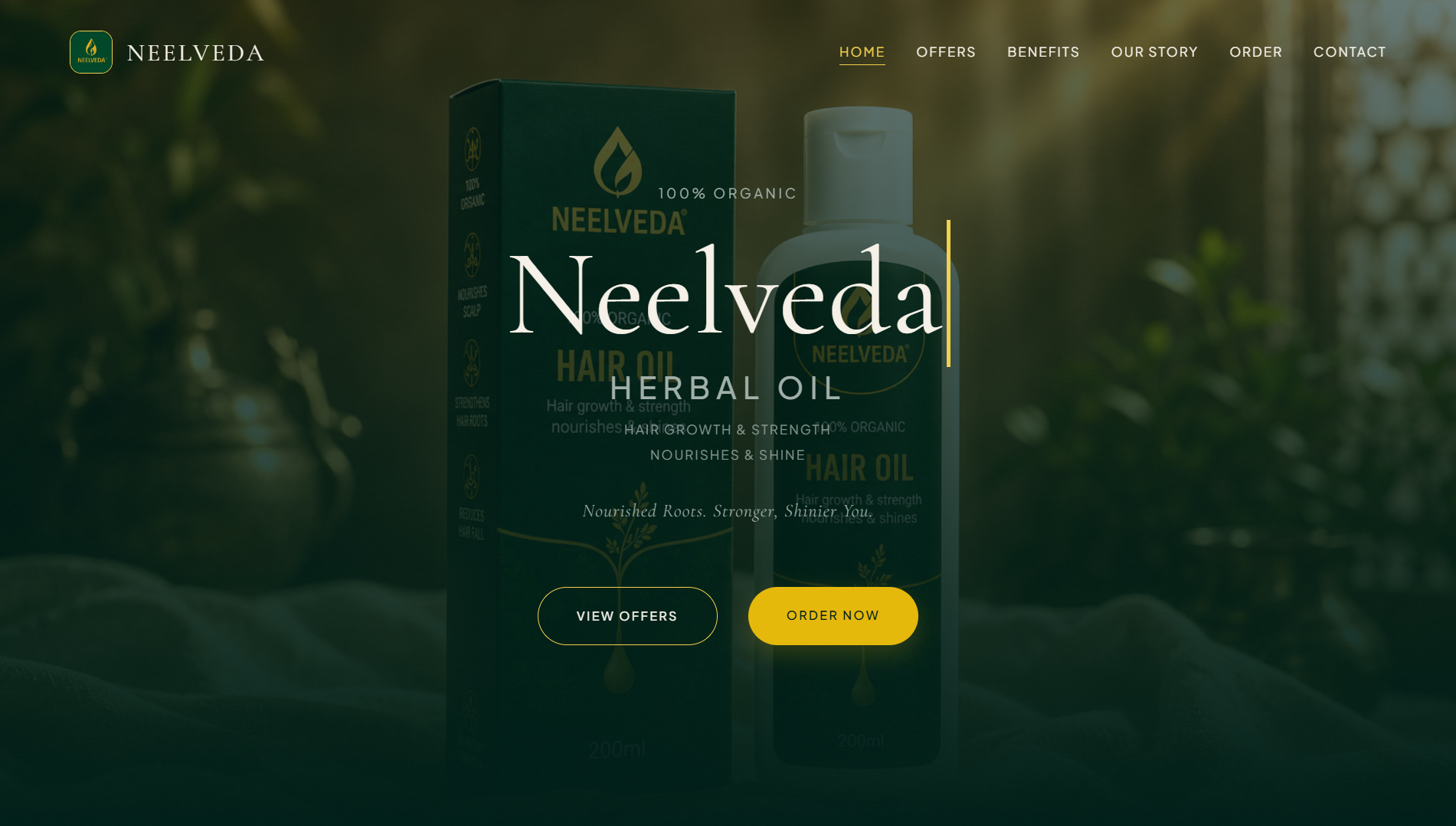
For Neelveda—an emerging wellness brand focused on traditional herbal ingredients—creating this baseline of trust was the key objective. They needed a clean, fast, and highly responsive website to serve as the hub for their digital identity, allowing local clients in Kerala and wellness enthusiasts across regions to explore their remedies easily.
The Client Requirement: Building Direct Trust
Neelveda's primary goal was straightforward: transition from relying purely on scattered social media messages to having a structured, professional digital presence. The website needed to accomplish a few concrete things:
- Clear Information Pathways: Customers looking for natural remedies want to find ingredients, benefits, and contact details without digging through complex page structures.
- Mobile-First Interface: Knowing that over 85% of local searches originate on mobile phones, the site had to scale down cleanly and load instantly on mobile networks.
- Clean Visual Branding: The design needed to reflect nature—using organic colors and plenty of whitespace to keep the layout feeling light and uncluttered.
The Challenges: Balancing Graphics and Performance
Every developer faces a common dilemma: how do you make a website visually engaging without making it heavy and slow?
For a wellness brand, high-quality, organic textures and product images are essential to build trust. However, loading raw, uncompressed imagery would ruin the mobile experience, especially on slower mobile networks in rural pockets.
Another challenge was navigation. Skincare and herbal brands often make the mistake of cluttering their headers with dozens of categories. We had to design a simplified menu that remains highly accessible on a 6-inch phone screen without overwhelming the user.
The Design Decisions: Space, Typography, and Palette
Instead of using default templates, we planned a custom grid layout tailored around the brand's identity:
Color Palette
We used deep, natural greens paired with soft earth tones and white backdrops. This color choice reflects natural ingredients and keeps the eye relaxed.
Typography
We selected clean sans-serif typography—using the modern geometric character of Outfit for prominent headers, and the high legibility of Inter for body paragraphs.
Whitespace
We purposefully left generous margins between elements. Whitespace isn't "empty space"; it acts as a visual breather, guiding the customer's eyes down the page naturally.
Frontend Development & Speed Tradeoffs
To keep the site as fast and clean as possible, we opted out of using heavy, bloated CSS frameworks. Instead, we wrote the site using:
- Semantic HTML5: Using proper tags (`article`, `section`, `nav`) so search engines can read the content hierarchy without confusing div nesting.
- Vanilla CSS Grid & Flexbox: Creating responsive columns that align themselves dynamically depending on the screen size, eliminating layout calculation delays.
- Vanilla JavaScript: Interactive elements, like the navigation toggle and dynamic scrolls, are powered by lightweight JavaScript, avoiding bulky external dependencies.
For image optimization, all visual assets were converted to the WebP format. WebP offers excellent image resolution at a fraction of the file size of traditional JPEGs, ensuring the site loads quickly on mobile connections without sacrificing visual quality.
Mobile-First Adjustments: Real-World Usability
Desktop layouts are easy; there is plenty of room to play with. But on mobile, every pixel counts. During development, we tested the interface on physical devices to make critical layout adjustments:
Touch Target Expansion
We ensured all buttons and links have a minimum target size of 48x48 pixels. This makes them easy to tap with a thumb, preventing accidental clicks on adjacent links.
Simplified Sticky Navigation
We created a clean top bar that remains visible as the user scrolls, but scales down in height to preserve vertical reading space on smaller mobile screens.
Stackable Layout Blocks
Columns that sit side-by-side on desktop display in a clean vertical stack on mobile, avoiding horizontal scrolling completely.
What We Learned: Developer Reflections
Building neelveda.in reinforced a core principle we follow at Techora: **a website is only useful if it's usable**.
Early in the design phase, we experimented with complex scroll animations and visual parallax effects. However, testing showed that these effects caused subtle stuttering on mid-range Android phones. We decided to strip out the heavy scripts and replace them with CSS-based transitions. The result? A smooth, uninterrupted scrolling experience.
By focusing on clean layout choices, fast loading times, and a natural typographic flow, we established a trustworthy home for the brand that is prepared to grow alongside their business.